FCL — full container load
Your cargo travels alone in a sealed container. Faster to clear than LCL, and usually cheaper once the volume passes roughly fifteen cubic metres.
Cost-effective sea freight solutions for FCL and LCL cargo worldwide.
What this service is
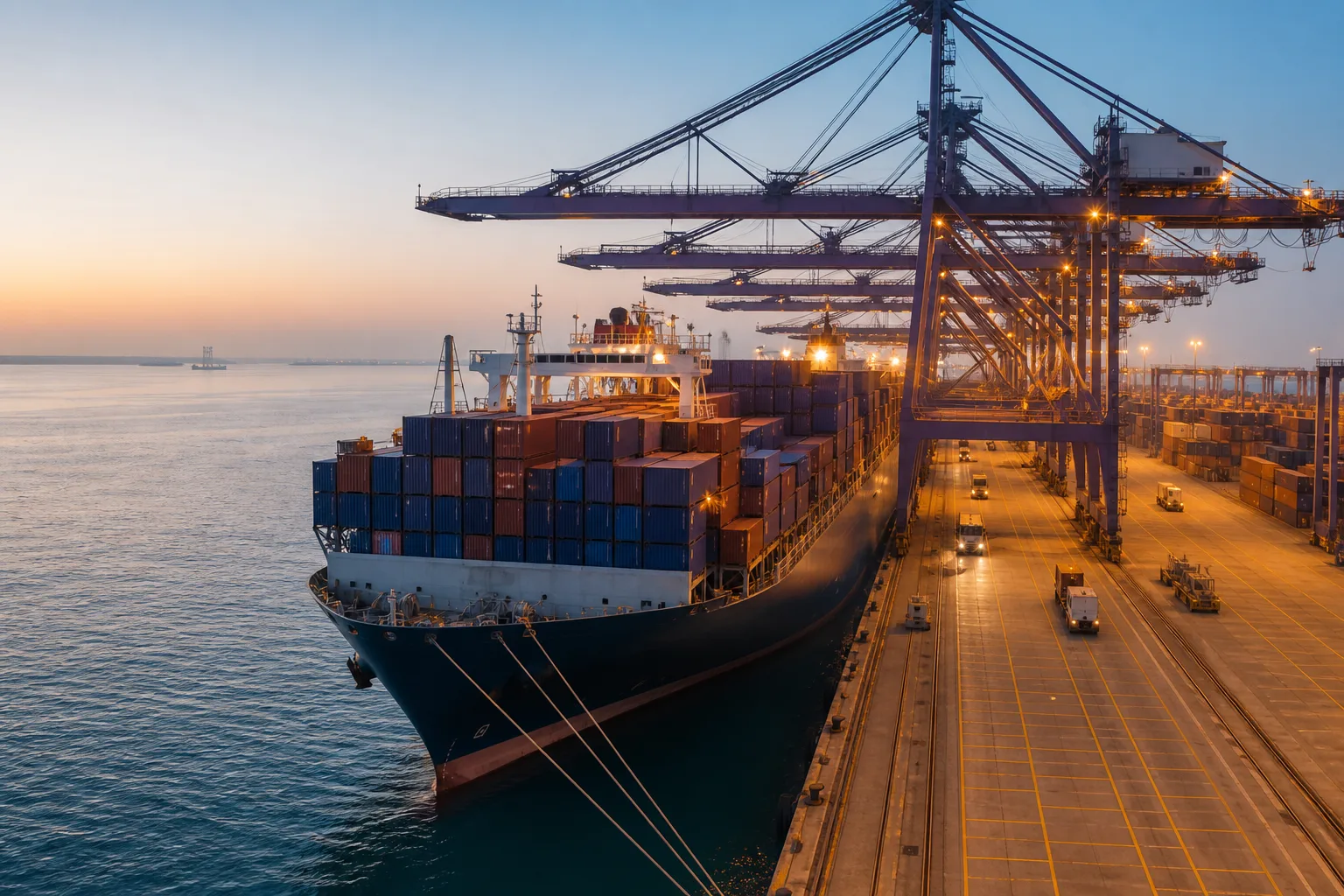
FAM Link books sea freight for full container loads and part loads worldwide. Sea freight carries the most cargo for the lowest cost per unit, which makes it the default choice for anything that is not urgent, and we plan the routing and equipment around your cargo rather than the other way round.
Your cargo travels alone in a sealed container. Faster to clear than LCL, and usually cheaper once the volume passes roughly fifteen cubic metres.
Smaller consignments share a container and you pay for the space used, measured on weight or volume, whichever is greater.
Reefer containers for temperature-controlled cargo, flat racks and open tops for cargo that will not fit through standard container doors.
We can stop at the discharge port or continue through clearance and inland delivery to the final address on the same booking.
Scope
All included and separately chargeable costs are clearly explained before booking.
Paperwork
Before we can price it
Cargo we move on this service
Common questions
The questions clients raise most often about sea freight. If yours is not here, send it with your quote request.
As a rule of thumb, below roughly fifteen cubic metres LCL usually costs less. Above that a 20ft container is often the same price or cheaper, and it avoids the extra handling and the consolidation wait that come with LCL.
Carriers allow a free period to collect and return the container. Demurrage is charged when the container stays at the terminal beyond it, detention when it stays at your premises. Both are avoidable, and we confirm the free days on the quote so you can plan clearance around them.
Yes. Cargo that will not fit a standard container moves on flat racks or open tops, and we arrange the survey, lashing and any route permits the destination requires. Send dimensions and weight and we will confirm the equipment.